 As Project Managers we communicate daily to Customers, Salespeople and Senior Management. We could be using the PMI-approved words and concepts, but our focus may be frustrating our audience. To effectively communicate with our stakeholders, we may need to tweak our methods to align the message with our audience’s concerns.
In his PMI webinar of 4 years ago: “5 ‘Visible’ Signs Your Project Will Deliver Expected Results,” Mark Swiderski, PMP, introduced 5 tools that will help us do just that. The impact of these tools impressed me so much that I wanted to write about one of the tools in this blog.
Swiderski suggests that in order to align our communication with the issues that senior management or our customers are interested in, we should build out our WBS and schedule from an outcomes based perspective.
I hear you already: “That’s what I’m doing!” But are you really?
It starts with the tool
- List our benefits,
- Identify the means of measuring success for each benefit and
- Finally, identify the owners that contribute to each benefit. Using that spreadsheet, you can then move into your WBS and then your schedule activities by keeping the focus on the outcomes or benefits you are trying to achieve. See the example below from his presentation.
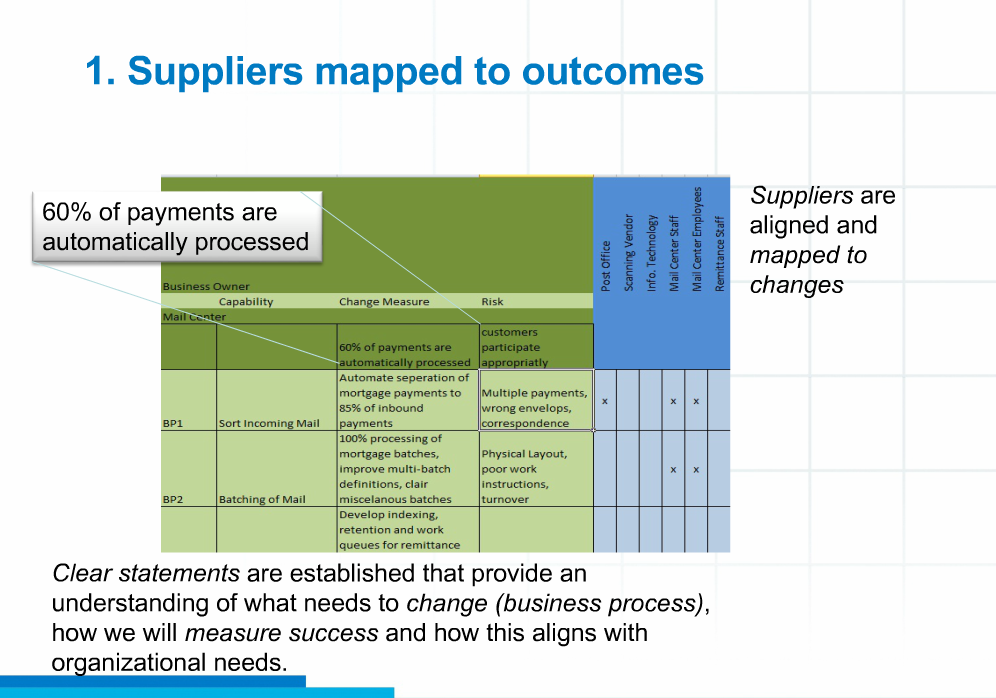
This is a useful chart even if all you do is to walk through the benefit identification steps for your project. However, its true value lies in how you use the information it provides to move your project through the project lifecycle.
Instead of building around deliverables, take the benefits outlined in your table and begin your Work Breakdown Structure around your benefits. The highest level in your WBS is your project, the next level down are your benefits. Below that are the deliverables that contribute to implementing those benefits.
- Your customer will see what they are looking for: the benefits that s/he expects to see from funding the project. It also highlights the dependencies that contribute to the successful delivery of the benefit.
- The team will see how their contribution helped deliver that benefit. If we structure our schedules based on ‘deliverables’, outside readers of our schedule will continue to need someone to interpret what they are looking at. It also communicates priorities.
- You will focus more effectively on ensuring that your project delivers on the benefits as described by the customer. It might be easier to see if you’re missing work packages if everything supporting that benefit is in one section of the schedule.
 Shisso